
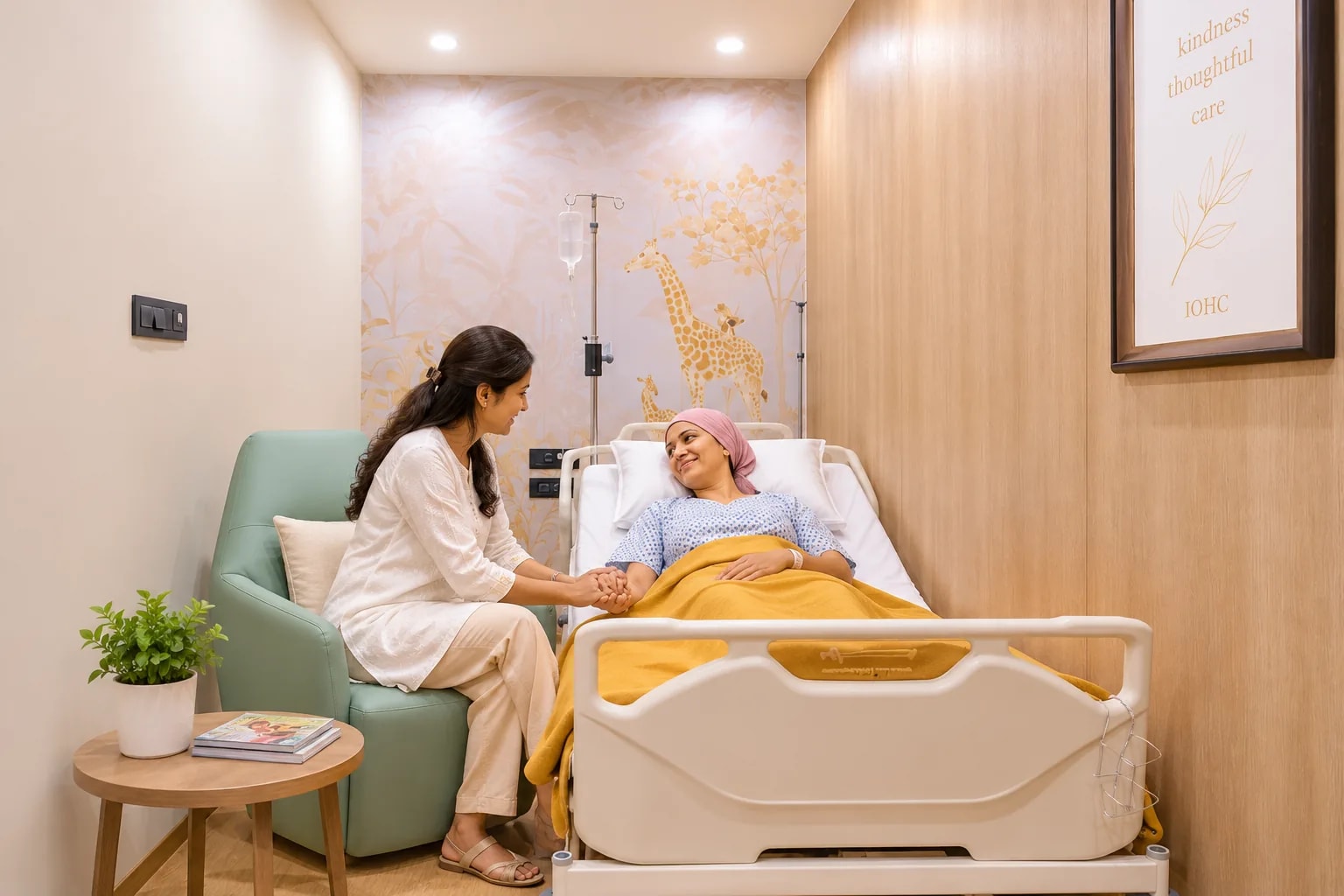
Cancer treatment can bring a long list of practical questions. Will you need to stay in hospital? How long will each session take? What happens during treatment? And, perhaps most importantly, can you return home afterwards?
For many patients, the answer is yes. Day care cancer treatment allows certain therapies to be administered in a carefully monitored clinical setting without requiring an overnight hospital stay. It combines specialist oncology care with a more structured and convenient treatment experience.
A typical day may involve:
- Clinical assessment: Your medical team reviews your health and confirms that you are ready for treatment.
- Supervised therapy: Medication is administered by trained oncology professionals while you remain under observation.
- Planned discharge: Once treatment and monitoring are complete, you can usually return home with clear instructions for the next steps.
For patients and families, understanding this process can make treatment feel more familiar and manageable.
What Is Day-Care Cancer Treatment?
Day-care cancer treatment is a model of oncology care in which selected treatments are provided during the day, with no planned overnight admission. It is commonly used for therapies such as chemotherapy, immunotherapy and certain targeted treatments, depending on the patient's treatment plan and clinical needs.
An oncology day care is specifically designed around this type of treatment. Unlike a routine outpatient appointment, it brings together medical supervision, treatment administration, monitoring and supportive care within one setting.
The emphasis is not simply on completing an infusion. Before treatment begins, the oncology team assesses the patient's condition, reviews relevant investigations and confirms the prescribed treatment. During the session, trained staff monitor the patient and respond to any concerns that may arise.
This structured approach helps treatment remain both clinically supervised and carefully coordinated.
How Does Day-Care Cancer Treatment Work?
So, how does day care cancer treatment work in practice? While the exact process differs according to the treatment and the individual, most sessions follow a planned sequence.
1. Assessment before treatment
The visit generally begins with a clinical assessment. Depending on the treatment protocol, blood tests may be reviewed to assess parameters such as blood counts, kidney function and liver function.
These checks help the oncology team determine whether treatment can proceed as planned and whether any adjustments are required.
2. Treatment preparation
Once treatment is confirmed, the prescribed medicines are prepared according to the oncologist's instructions. The team verifies the medication, dose and treatment schedule before administration.
This preparation is an important part of safe oncology care and requires attention to individual treatment protocols.
3. Administration and monitoring
Treatment may be administered through an intravenous line or an implanted port, depending on the patient's care plan. Throughout the session, oncology nurses monitor the patient and remain attentive to any immediate reactions or changes.
The duration can vary considerably. Some treatments may take less time, while others require several hours of administration and observation.
4. Review before going home
Before discharge, the clinical team assesses the patient's condition and provides guidance about medicines, hydration, possible side effects and when to seek medical advice.
This final review is an important part of outpatient cancer treatment, because care continues beyond the treatment chair.
Which Treatments Can Be Given in Day Care?
Not every treatment requires hospital admission. Depending on the diagnosis, treatment protocol and overall health of the patient, several forms of oncology treatment may be delivered through a day-care setting.
- Chemotherapy: Certain chemotherapy regimens can be administered as scheduled infusions or injections.
- Immunotherapy: Some immunotherapy medicines can be given as monitored infusions.
- Targeted therapy: Selected targeted treatments may be administered without an overnight stay.
- Supportive treatment: Hydration, symptom management and other supportive medicines may form part of the treatment visit.
- Blood and platelet support: In appropriate circumstances, transfusions may also be provided under medical supervision.
The decision is always individual. Some patients may need prolonged observation or inpatient care based on their treatment protocol or clinical condition.
Day Care or Overnight Hospital Treatment?
The difference is primarily based on the level of monitoring and care required.
| Day-care treatment | Overnight hospital treatment |
|---|---|
| Treatment is completed during the day | Treatment or monitoring continues overnight |
| Suitable for selected therapies | Used when more intensive observation is required |
| Patients usually return home the same day | Patients remain under hospital supervision |
| Planned monitoring during and after treatment | Continuous or extended clinical monitoring may be required |
Day care does not mean less medical attention. It means the treatment has been planned in a setting where the required level of supervision can be provided without an overnight admission.
What Is an Oncology Day-Care Visit Like?
For someone attending treatment for the first time, knowing what the day may look like can remove some of the uncertainty.
You may be asked to bring previous reports, current medication details and recent investigation results. Once you arrive, the care team reviews the necessary information before treatment begins.
During longer sessions, patients may read, listen to music or simply rest. Comfortable surroundings can become particularly important for people who need repeated visits over several weeks or months.
Good oncology care also extends beyond the medicine itself. Clear communication, symptom management and access to supportive services can all contribute to a more coordinated treatment experience.
Why the Right Day-Care Setting Matters
The quality of a day-care experience depends on more than the physical treatment area. It requires clinical systems that support safe administration, monitoring and continuity of care.
A well-coordinated centre should have:
- Experienced oncology professionals: Treatment should be supervised by a team familiar with the specific therapy being administered.
- Structured monitoring: Patients should be observed appropriately throughout treatment, with protocols in place to respond to immediate concerns.
- Treatment coordination: Investigations, prescriptions, treatment schedules and follow-ups should work together rather than being managed as isolated appointments.
- Supportive care: Patients may also need help managing treatment-related symptoms, nutrition, pain or general wellbeing.
For patients looking for a cancer day care centre Mumbai, these factors can be useful when evaluating where to receive treatment.
What Should You Ask Before Starting Day-Care Treatment?
Before your first session, it is reasonable to ask your oncology team what the treatment involves and what you should expect on the day.
Useful questions include:
- How long is the treatment expected to take?
- Will I need blood tests before each session?
- What should I eat or drink before treatment?
- Which symptoms should I report immediately?
- When will my next treatment or review take place?
Having these answers in advance can make each visit feel more organised and give patients and families greater clarity about the treatment journey.
Take the Next Step Towards Planned, Personalised Care
Day-care treatment can make an important part of oncology care more structured, coordinated and manageable. If you or someone close to you has been advised to undergo treatment in a day-care setting, do not leave questions unanswered. Speak with your oncology team, understand the treatment plan and know what to expect before your first session.
At IOHC, patients receive personalised oncology care supported by structured treatment planning, infusion monitoring and supportive services. Reach out to the care team to understand your treatment options and take the next step with greater clarity and confidence.
Frequently Asked Questions
Is day-care cancer treatment safe?
When a treatment is considered clinically suitable for day care, it can be administered under appropriate oncology supervision. The decision depends on the therapy, the patient's health and the level of monitoring required.
Pre-treatment assessments help determine whether the session can proceed.
Trained staff monitor the patient during treatment and provide guidance before discharge.
How long does chemotherapy day care take?
There is no fixed duration for chemotherapy day care. The time depends on the medicines being administered, preparation requirements and the observation period recommended by the oncology team.
Some sessions may be relatively short, while others can take several hours.
Your treatment team can explain the expected duration before each session.
Can I go home after outpatient cancer treatment?
Many patients can return home once their treatment and required observation have been completed. However, this depends on the treatment protocol and how the patient is feeling after the session.
The clinical team will assess you before discharge.
You should follow all instructions regarding medicines, rest, hydration and symptoms to watch for.
Is every chemotherapy treatment given in a day-care centre?
No. The setting depends on the chemotherapy regimen, treatment intensity and individual clinical requirements.
Some chemotherapy protocols are well suited to supervised day care.
Others may require extended monitoring or hospital admission.
What happens at an oncology day care?
An oncology day-care facility provides a structured environment for administering selected treatments and monitoring patients throughout the session.
The visit may include assessment, investigations and treatment preparation.
Nurses and other oncology professionals monitor the patient during administration and provide post-treatment guidance.
Can immunotherapy be given without hospital admission?
Certain immunotherapy medicines can be administered through a day-care setting when the treatment protocol and patient's condition make this appropriate.
The schedule depends on the specific medicine and treatment plan.
Patients are monitored during treatment and advised about symptoms that may require medical attention.
Published on Oct 02, 2026 • 8 min read